

Spices and Dairy- A perfect combo to add variety to the menu
“When you combine amalgamating spices with dairy, which tends to lengthen flavour, it can bring a mild, earthy base to life.”
- Spices are a fun and cost-effective way to add more variety to your menu
- Amalgamating spices are typically used with dairy products to form a base for your dish. You then add pungent and hot, or sweet and warm spices
- Cream, sour cream, yoghurt and Dairy Farmers Cooking Cream are terrific choices to use with spices in a range of Indian, Mexican, Spanish and Italian dishes

“Most have a more than twelve month shelf life, they’re easy to store as they don’t take up much shelf space, and they’re a great way to enhance your menu. You can offer a smoky paprika chicken with sour cream one week and a butter chicken curry the next, and all you’re changing is your dairy component and choice of spices.”
Spices fall into three main categories: amalgamating spices, used as a base to bridge and balance stronger or contrasting flavours; pungent and hot spices; and sweet and warm spices.
“Amalgamating spices, which are your general binding spices, are typically used with dairy products to form a base for your dish which can be anything from an Indian curry to an Italian arrabbiata or even a sweet dessert,” Caroline explains. “When you combine amalgamating spices with dairy, which tends to lengthen flavour, it can bring a mild, earthy base to life. Then you add your pungent and hot notes or sweet and warm notes in the back end.”
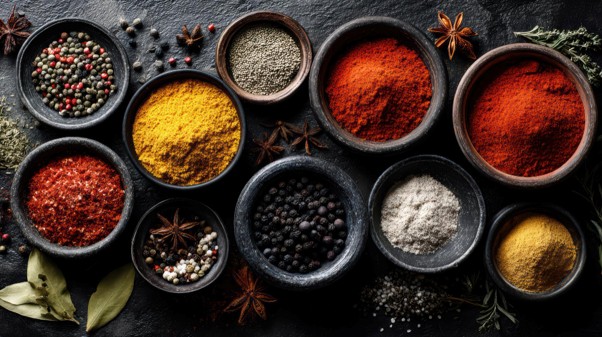
Examples of amalgamating spices include coriander seed, which imparts a mild, citrusy flavour, and turmeric which brings an earthy note. These combined with cream are the traditional base for an Indian curry, to which you might then add pungent spices like ginger and chilli, and warm spices like cardamom and cumin.
“Spices are also quite versatile,” Caroline points out. “We tend to think of cardamom in Indian curries and rice dishes but traditionally in European cuisine it was regarded as a sweet spice. Cardamom works very well with vanilla, which is another amalgamating spice, for example as in a panna cotta dessert with cream and orange to impart a pungent note.”
Caroline’s advice is to not be afraid of experimenting with spices. “Always start with your amalgamating spice bases and always think of dairy. Cream, sour cream, yoghurt and Dairy Farmers Cooking Cream are terrific choices to use with spices in a range of Indian, Mexican, Spanish and Italian dishes, as is butter and clarified butter (ghee). Many cheeses are also terrific complements to spice, such as ricotta, which works well with cardamom and vanilla in cheesecakes. The stronger cheddar flavoured cheeses go with earthy spices like cumin and paprika.”