

Capitalise on consumer demand for protein rich meals
“Dairy is a great go-to for adding more protein into the staple meals on your menu”
- Calling out protein-rich options on menus is an emerging trend in foodservice’s QSR market
- An easy way to increase the protein content of meals is by adding more dairy ingredients like cheese, yoghurt and milk
- You can also stock up on grab and go products like Dairy Farmers Protein Smoothies and Dare Protein iced coffee drinks, which feature prominent on-pack protein call-outs
The growing consumer demand for protein-rich food is spreading from retail into foodservice, with the QSR (Quick Service Restaurant) sector one of the first segments of the market to capitalise upon this emerging trend.
“Over the past year we’ve seen an increase in prominent protein callouts on supermarket shelf retail product packaging, as food manufacturers have identified that demand from consumers is on the rise,” says Bega Foodservice Corporate Chef Caroline Westmore.
Mainstream media has helped publicise this trend, with The AFR Magazine tracing the increased interest in protein-rich foods to the rise of keto diets and more recently the growing number of Australians on GLP-1 weight loss treatments such as Ozempic[1]. As loss of muscle mass often accompanies weight loss, people on GLP-1s are being advised by their GPs to boost their protein intake. [2]
Caroline says one of the easiest ways to increase the protein component of meals is through the addition of extra dairy ingredients like cheese, yoghurt and milk. “Dairy is a great go-to for adding more protein into the staple meals on your menu. Cheeses, especially hard cheeses like parmesan which are around 35 per cent protein, are good choices, while yoghurt tends to be around 20g of protein per cup. These are very easy products to add in to recipes. For example, you can load up fries with cheddar and parmesan and that can add an extra 20g of protein per serve. Or you can add cheese to your potato mash – an extra 100g of cheddar or parmesan will give you 35g more of protein. Another idea is to serve some yoghurt raita dip with your rice.”
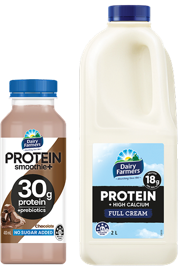
In response to the growing demand for protein boosted products, last year Bega introduced Dairy Farmers High Protein Full Cream Milk, which contains 6g of protein per 100ml (70 per cent more protein than regular full cream milk). “This is a quick and easy way to add an extra protein shot, such as making high protein smoothies or coffees – and you can charge extra for it, just as you would for soy or almond milk, so it’s an opportunity to grow your cheque.”
And with QSRs like McDonalds, Guzman y Gomez and Starbucks already including protein callouts on their menus, operators across the broader foodservice market can easily capitalise on this trend by offering ‘grab and go’ products like Dairy Farmers Protein Smoothies and Dare Protein iced coffee drinks, each of which feature a prominent 30g protein per serve call-out on their packaging. These can also be incorporated within meal deals – combining protein-rich food with a protein drink to give customers the option of an even bigger total protein hit.
[1] https://www.afr.com/life-and-luxury/food-and-wine/from-cheesecake-to-bottled-water-how-protein-took-over-the-world-20260515-p5zxcy
[2] Ibid